
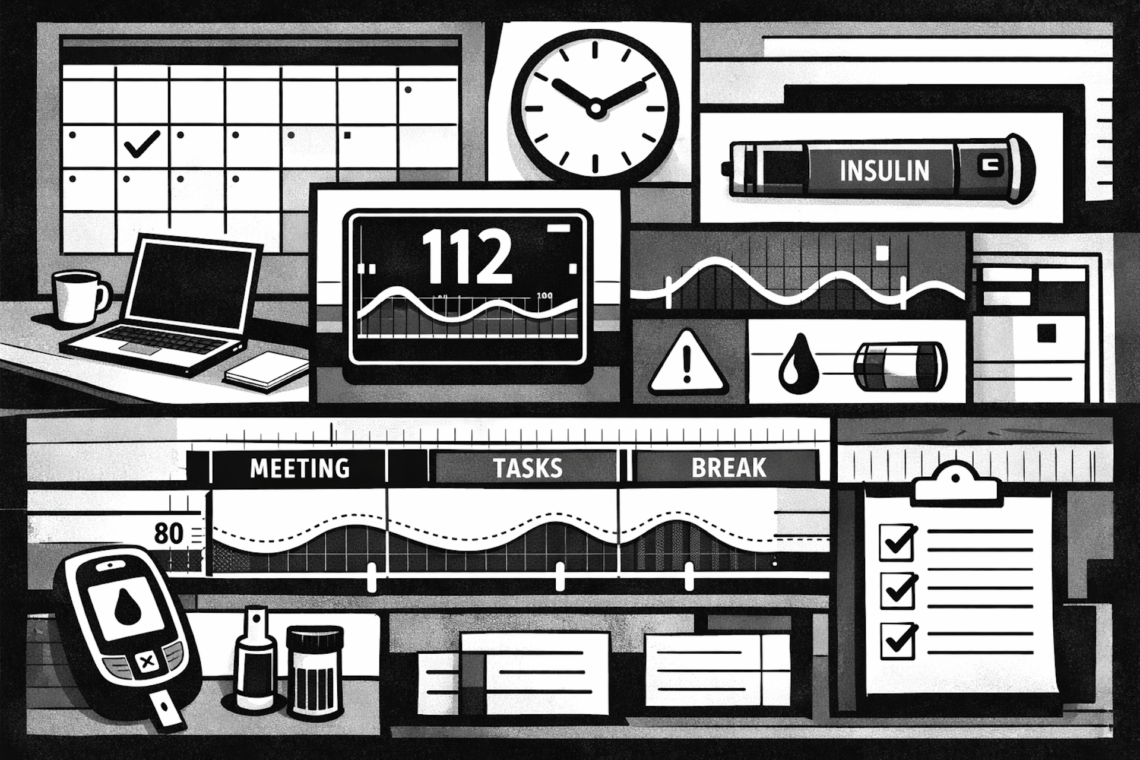
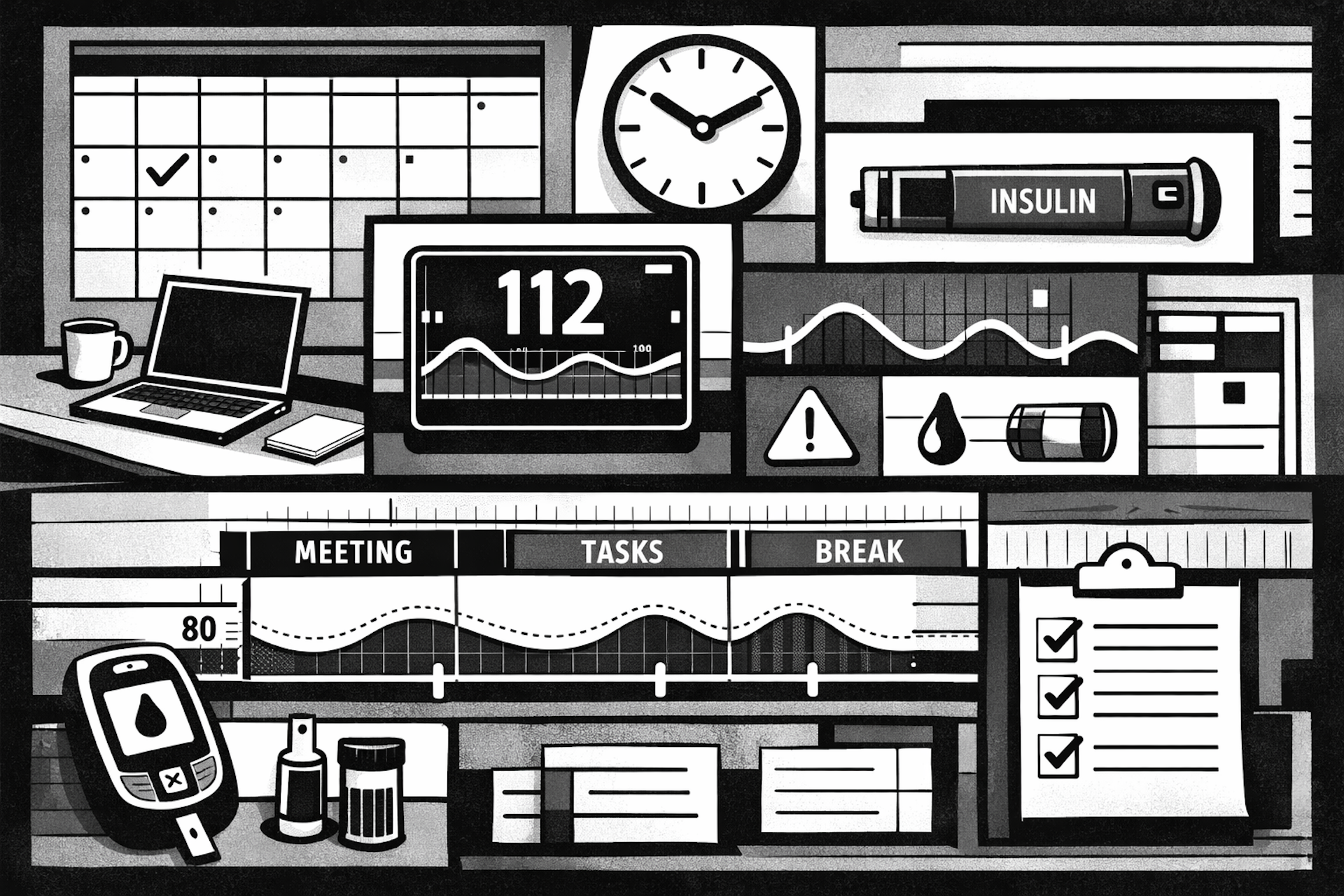
Managing blood sugar (glucose) at work poses unique challenges for people with type 1 diabetes: varying activity levels, meal timing, commuting stress, meetings, insulin dosing and stigma. This article explores practical strategies for people with type 1 diabetes in two broad work types (office/desk work vs more active/physical labour).
Understanding the work context: desk vs active work
Desk/office work
In a typical office role you may be largely sedentary for long stretches, perhaps commuting in a vehicle or transit, having set meetings, desk/computer work, and little physical movement. This means your insulin needs and food/snack strategy may differ from someone moving frequently.
Active/physical-labour work
If your job involves walking, lifting, climbing, carrying, or variable shifts of high or low intensity, your blood sugar may fluctuate more widely (especially if there are bursts of activity or heavy exertion). You’ll need to plan for insulin dosing, snacks and timing differently.
Meals, snacks and commuting
Timing of meals and snacks
For desk workers: aim for predictable meal times (for example: breakfast at home, snack mid-morning, lunch at noon, snack mid-afternoon, maybe a snack if needed before commuting). Predictability helps with insulin timing and avoids large fluctuations when you have little movement.
For active workers: you may need additional snacks or to adjust insulin because more physical activity lowers glucose more quickly and increases the risk of low blood sugar (hypoglycaemia).
Snacks and commuting
If your commute is long or unpredictable, carry a small carbohydrate snack (e.g., 15–30 g carb) in case your insulin acts and your blood sugar drops before you get to work.
For active work: if moving to the work site or between sites, treat that as activity and have extra snacks ready or reduce your insulin.
Meal composition
Meals with moderate carbohydrate, protein and healthy fat help smooth glucose. For example, whole-grain lunch with lean protein and vegetable fibre will reduce rapid rises post-meal compared to meals with refined carbs.
Moving around meal times is also important. Aerobic exercise improves fitness and can influence glucose control in T1D and T2D (Riddell et al., 2017); even a short walk after a meal can help keep your blood sugar in range.
Making it work during the workday
If you’re desk-bound, set an alarm or reminder to check blood sugar and to stand up and move your body. Schedule snacks and meals to keep your insulin and blood sugar under control.
If you are in a shift or active job, carry snacks and water, plan carbohydrate intake around movements (e.g., before heavy lifting or after a rush of tasks).
Insulin dosing and blood sugar checks
Checking blood sugar regularly
At minimum: check blood sugar before meals, 1–2 hours post-meal (if possible), before major activity, and at end of work shift or before commuting home.
If you use a continuous glucose monitor (CGM), pay attention to trends (drops or rises) in relation to movement and meals.
Adjusting insulin around activity
For active work: randomized control trial evidence in type 1 diabetes shows that reducing the basal rate or bolus insulin dose before exercise may reduce the risk of hypoglycaemia (Roy-Fleming 2019).
Another randomized control trial (McCarthy 2023) on automated insulin delivery around exercise in adults with T1D found that insulin dose reduction 90 minutes before exercise was effective in minimizing dysglycemia.
Practical rules to follow
If you know you will perform a sustained moderate-intensity load of work (e.g., several hours of walking/lifting), you might reduce your mealtime (rapid-acting) insulin or take an extra 15–30 g snack. American Diabetes Association guidelines suggest if pre-exercise glucose is < ~5.6 mmol/L (100 mg/dL) have ~15 g carb snack. (See also: Diabetes Canada guidelines).
For desk work with minimal movement: you may require fewer snacks and you may need more pre-meal insulin to account for less movement than on active days.
In both cases: log the effect of your work on your glucose levels and adjust accordingly. Over time you’ll recognize patterns, which makes planning easier.
Meetings, interruptions and dosing
If you have a long meeting and can’t pause for lunch or a snack, plan accordingly: bring snacks with you, reduce insulin before the meeting (e.g. if the meeting is after lunch), or choose a meal before the meeting that is less likely to cause a rapid spike or drop in your blood sugar.
For desk work: you may have more predictable schedule and can plan bolus insulin 15–20 minutes before meal; for active work, consider waiting until after movement to bolus if meal is postponed.
Physical activity at work & managing variation
Active work environment
In jobs involving physical labour, intermittent bursts of activity increase insulin sensitivity which may cause unexpected drops in blood sugar. One trial (Jenkins 2025) found 4 weeks of active breaks improved time-in-range (TIR) in T1D adults.
Before heavy exertion: check glucose, consider a snack if trending downward, reduce insulin if feasible.
After activity: remember that enhanced insulin sensitivity may persist for hours — monitor and possibly reduce basal or snack accordingly.
Desk/office context (less movement)
Longer sedentary periods reduce insulin sensitivity; you may see higher blood sugar after meals or less drop from insulin.
Strategies: incorporate short activity breaks (walks, stairs) to simulate movement and help reduce post-meal rises. The active break randomized control trial above suggests even small movement segments help.
Use technology (CGM alarms) and prompts to remind you to get up, move, check sugar.
Managing commuting and work transitions
Commuting (car, bus, train) often means periods of sitting plus stress; you may engage in little movement but still take insulin before leaving home. Consider: does your commute raise or lower your glucose? If driving and stressed, your glucose might rise (stress hormone effect). If standing/walking corridors, your movement may reduce more than you expect.
Plan a snack or blood sugar check before leaving, especially if you’re delaying lunch or your morning snack because of meetings or work responsibilities.
If you arrive at work and straight into a meeting or heavy task, treat that as “pre-activity” and make checking glucose part of your "start work" routine.
Meetings, workplace interruptions and planning
Meetings often interrupt meal/snack schedules or physical movement.
For desk workers: set reminders to pause, check glucose, have a snack if needed.
For active workers: they may be pulled into urgent tasks, missing meals or snacks. Carry portable carbohydrate (glucose tabs, fruit, juice) and check glucose when possible.
Insulin bolus timing: if lunch is delayed because of a meeting, either delay your bolus or take a smaller bolus and snack earlier; aim to avoid insulin peaking before you eat.
Use break times as opportunities to check glucose and refuel.
Stigma, disclosure and employer obligations in Canada & U.S.
Potential stigma
Some workers may feel uncomfortable discussing their diabetes or taking insulin and checking blood sugar in front of colleagues or managers. Planning ahead and having a one-line explanations (“I just need to check”), or keeping monitoring discreet, can help.
Legal obligations: Canada
In Canada, under the Canadian Human Rights Act and provincial human rights codes, T1D is recognized as a disability; employers must accommodate to the point of undue hardship.
Under the Employment Standards Act in many provinces (e.g., British Columbia) employees have rights to take time off for medical appointments (depending on jurisdiction).
Legal obligations: U.S.
Under the Americans with Disabilities Act (ADA) employers must provide reasonable accommodation for employees with disabilities, including T1D (e.g., breaks to test glucose, snack breaks, carry supplies).
The Family and Medical Leave Act (FMLA) may provide job-protected leave for serious health conditions, including T1D complications, subject to eligibility.
Practical implications
Talk with your employer (e.g. manager or HR rep) about your needs: e.g., ability to test glucose at your desk, to have snacks, to leave your work area briefly, to carry supplies and have fridge access for insulin.
For shift or active-work roles: you may request a consistent schedule when possible, or space for a snack break, or a safe storage place for supplies.
Keep the conversation simple and fact-based: explain that checking your glucose and carrying snacks is a normal part of managing your T1D and enables you to do your job safely and effectively.
Summary of key strategies for each work type
| Work type | Key strategy highlights |
|---|---|
| Desk/office work | Predictable meals + snacks, set reminders for glucose checks, incorporate short movement breaks, plan for meetings and insulin timing. |
| Active/physical work | Carry portable snacks, check glucose before heavy exertion, adjust insulin for increased activity, monitor post-activity drops, plan for variation. |
| Both types | Communicate needs to employer/HR, know your legal rights, carry supplies, keep glucose monitoring visible but discreet. |
Other considerations
- Technology: CGM and automated insulin delivery systems simplify monitoring and adjustment around work and activity. Randomized control trial evidence (McCarthy 2023) supports benefits of AID systems around exercise.
- Fatigue and stress: Work-related stress or fatigue can affect glucose (rise in stress hormone, or you may skip meals). Try to plan ahead, have snacks, monitor changes.
- Shift work / irregular hours: If you do shift work, meal and snack timing will vary. Consider the following day’s schedule when dosing insulin, and keep extra snacks for unexpected shifts or overtime.
- Hydration: Dehydration can affect glucose readings and concentrate insulin. Carry water and check glucose when you drink less.
- Safety at work: For active work sites, ensure you have easy access to your supplies, can safely take breaks, and your employer knows you may need to step away briefly if glucose drops or raises.
- Communication with healthcare team: Let your diabetes educator or endocrinologist know about your work demands, physical activity at work, shift patterns and your snack/meal schedule so you can tailor an insulin and carbohydrate plan.
Conclusion
Managing T1D at work—whether at a desk or in a physically active role—requires planning around meals, snacks, insulin and movement. By checking your glucose regularly, adjusting insulin based on activity, carrying snacks, using short movement breaks, planning for meetings and commute transitions, and knowing your rights in the workplace, you can stay productive and safer while managing your blood sugar. Communication with your employer and healthcare team rounds out a practical strategy for success.
References
- Riddell MC, et al. Exercise management in type 1 diabetes: a consensus statement. Lancet Diabetes & Endocrinology. 2017;5(5):377-390.
- Roy-Fleming A, et al. Timing of insulin basal rate reduction to reduce exercise-induced hypoglycaemia. 2019.
- McCarthy OM, et al. Automated insulin delivery around exercise in adults with type 1 diabetes. 2023.
- American Diabetes Association. >Exercise and Type 1 Diabetes. Diabetes.org. Published 2024
- Diabetes Canada. Clinical Practice Guidelines: Physical activity and diabetes. Chapter 10. 2020.
- Jenkins JG, et al. Can 4 weeks of real-world active breaks improve time spent within the target glycaemic range in people with type 1 diabetes? BMJ Open Sport & Exercise Medicine. 2025;11(2):e002594.
- Government of Canada. Canadian Human Rights Act. Justice Laws Website. Published 2024.
- Government of British Columbia. Employment Standards Act. BC Laws. Published 2024.
- U.S. Department of Justice, Civil Rights Division. Americans with Disabilities Act (ADA). ADA.gov. Published 2024.
- U.S. Department of Labor. Family and Medical Leave Act (FMLA). dol.gov. Published 2024.