
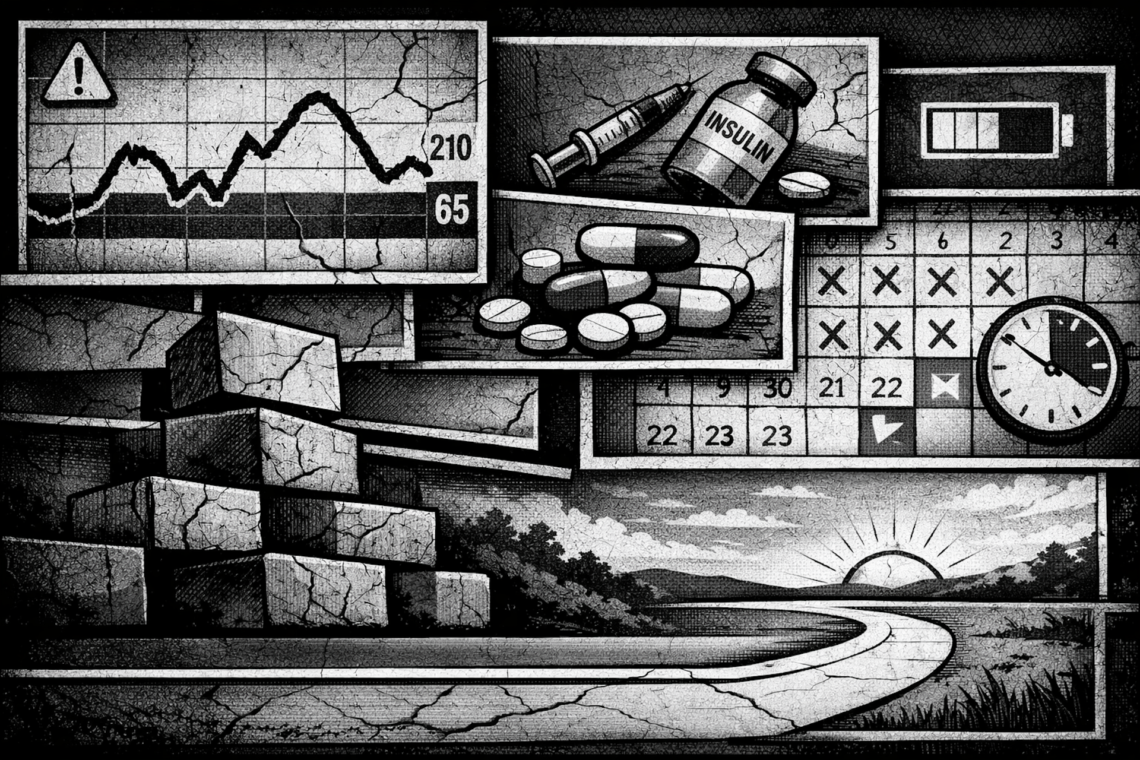
For many adults who have lived with type 1 diabetes for decades, the mental load of constant glucose monitoring, insulin dosing, and daily self care can take a real toll. This emotional exhaustion is known as diabetes burnout.
Recent research reveals that this is not just "feeling down." It is a significant hurdle that affects long-term health. This article explores findings from recent randomized controlled trials and meta-analyses to understand how burnout affects adults with long-standing T1D and the evidence for effective coping strategies.
Defining the Problem: Distress vs. Burnout
While often used interchangeably, researchers distinguish between "diabetes distress" and "burnout."
Diabetes distress refers to the emotional burden and worries specific to managing diabetes.
Diabetes burnout is the result of prolonged, unmanaged distress.
A 2020 qualitative study defined burnout as a combination of three factors: exhaustion (feeling physically and mentally drained), detachment (feeling disconnected from one's own care), and powerlessness (feeling that no matter what you do, it won’t help) (Abdoli et al., 2020). Recent data suggests that severe distress - a precursor to burnout - is highly prevalent. A 2022 study found that nearly 31% of adults with a diabetes duration of more than 30 years experienced severe distress, a rate significantly higher than those with a shorter duration of the disease (Kurza et al., 2022).
The "Long-Haul" Effect: Why Duration Matters
The length of time a person has lived with T1D is a critical risk factor for diabetes burnout. Research indicates that the longer a person manages diabetes, the higher the risk for severe psychological fatigue.
A 2022 cross-sectional study highlighted that the presence of chronic complications - which are more common in those with long-standing disease - is a major driver of distress. Participants with three or more complications were significantly more likely to report severe distress levels (Kurza et al., 2022). This creates a difficult cycle: complications increase distress, and the resulting burnout often leads to "checking out" of diabetes management (e.g., missing insulin doses, not paying attention to blood sugar levels), which in turn worsens blood sugar control (Hessler et al., 2017).
The Technology Paradox
Diabetes technology, such as insulin pumps and Continuous Glucose Monitors (CGMs), has revolutionized self care for people with type 1 diabetes. However, its impact on mental health is mixed.
A 2024 systematic review found that while technology generally improves blood sugar levels, it does not always reduce distress. In fact, for some older adults, the constant alarms and data can increase the feeling of being "watched" or "tethered" to the disease, contributing to sensory overload and burnout (Lorenzen et al., 2024). Conversely, other studies suggest that when technology reduces the mental math of diabetes (like automated insulin delivery systems), it can lower the burden of care (Lorenzen et al., 2024).
The key takeaway is that technology is a tool, not a cure for burnout, and its impact varies by individual.
Effective Interventions: What Works?
The research on effective treatments for diabetes distress and burnout is promising. Here are some specific strategies backed by recent randomized controlled trials that may help reduce burnout and distress.
Mindfulness-Based Interventions (MBI)
Mindfulness - the practice of focusing on the present moment without judgment - has emerged as a powerful tool for reducing diabetes distress. A 2019 meta-analysis analyzed factors influencing the effectiveness of these interventions. The study found that mindfulness-based interventions (MBIs) significantly reduced diabetes distress, particularly for individuals with high levels of distress when they began the mindfulness practice (Guo et al., 2019).
The research highlighted three specific factors that make these programs effective:
- Format: Group-based sessions were more effective than individual ones, likely due to the shared experience.
- Homework: Programs that assigned home practice (exercises to do between sessions) showed better results.
- Consistency: Interestingly, the positive effects on distress were often stronger in the long term than immediately after the course ended, suggesting that mindfulness builds resilience that grows over time.
Cognitive Behavioral Therapy (CBT)
CBT is the gold standard for treating diabetes distress. A 2018 meta-analysis confirmed that psychological interventions tailored specifically to diabetes are effective at reducing both distress and HbA1c (average blood sugar) levels (Schmidt et al., 2018). These programs do not just "talk about feelings"; they teach practical skills to handle the frustration of unpredictable blood sugar numbers without spiraling into negative thoughts.
Acceptance and Commitment Therapy (ACT)
A newer approach, ACT, helps patients accept difficult feelings rather than fighting them, allowing them to focus on what matters most in their lives. Emerging research suggests ACT can increase "psychological flexibility," helping individuals stick to their health goals even when they feel overwhelmed (Soriano et al., 2024).
Peer Support
Connecting with others can be a powerful tool. A 2024 study on peer support interventions found that sharing stories and experiences with others who "get it" significantly reduced burnout and depressive symptoms (Kelly et al., 2024). For older adults, who may have felt isolated in their management for decades, this validation is clinically therapeutic.
Conclusion
Diabetes burnout is a valid and common response to the relentless demands of long-standing type 1 diabetes. Research confirms that adults with type 1 diabetes, particularly those with complications or who have lived with T1D for more than 30 years, are at elevated risk. But burnout doesn't have to be permanent. Evidence-based treatments like Mindfulness-Based Stress Reduction, CBT, and structured peer support offer proven paths to regain a sense of control and reduce the emotional weight of diabetes.
References
- Abdoli S, Hessler, D., Vora, A., Smither, H., Stuckey, H., Descriptions of Diabetes Burnout From Individuals With Type 1 Diabetes: An Analysis of YouTube Videos. Clin Diabetes. 2020;38(3):271-276.
- Kurza, D., Kobos, E. Diabetes distress in adult patients with type 1 and type 2 diabetes. Med Sci Pulse. 2022;16(4):11-18.
- Hessler, D., Fisher, L., Polonsky, W., Masharani, U., Strycker, L., Peters, A., Blumer, I., & Bowyer, V., Diabetes Distress Is Linked With Worsening Diabetes Management Over Time in Adults With Type 1 Diabetes. Diabet Med. 2017;34:1228-1234.
- Lorenzen JT, Madsen KP, Cleal B, et al, Associations between use of diabetes technology and diabetes distress: a Danish cross-sectional survey of adults with type 1 diabetes. BMJ Open. 2024;14:e080053.
- Guo J, Wang H, Luo J, et al. Factors influencing the effect of mindfulness-based interventions on diabetes distress: a meta-analysis. BMJ Open Diabetes Res Care. 2019;7:e000757.
- Schmidt CB, van Loon BJP, Vergouwen ACM, Snoek FJ, Honig A., Systematic Review and Meta-Analysis of Psychological Interventions in People with Diabetes and Elevated Diabetes-Distress. Diabet Med. 2018;35(9):1157-1172.
- Soriano EC, Fortmann AL, Guzman SJ, Sandoval H, Spierling Bagsic SR, Bastian A, Antrim M, Chichmarenko M, Philis-Tsimikas A., Addressing Emotional Distress to Improve Outcomes in Adults with Type 1 Diabetes: Protocol for ACT1VATE Randomized Controlled Trial. Contemp Clin Trials. 2024.
- Kelly RC, Holt RIG, Desborough L, et al. The Psychosocial Burdens of Living with Diabetes: Survey Report. Diab Med. 2024.