
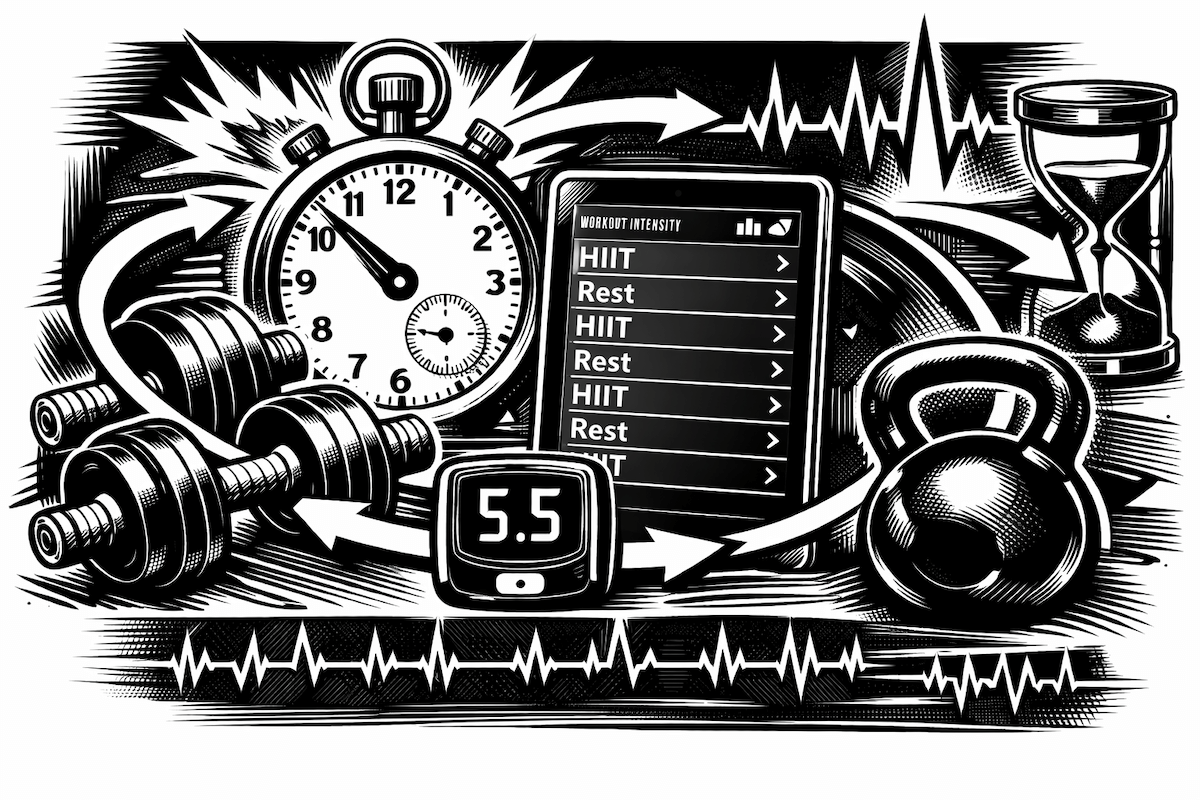
High-Intensity Interval Training (HIIT) in weight lifting is a hybrid workout method that combines resistance exercises performed in a circuit with short rest intervals (15–60 seconds) and high-level effort.
This format bridges the gap between traditional strength training and cardio, providing a metabolic and muscular challenge in under 30 minutes.
Common formats include:
- Supersetting heavy lifts with explosive bodyweight movements.
- Performing 3–5 exercises in circuits (30-45s on, 15-30s off) for 3-5 rounds.
- Working at a rate of perceived exertion (RPE) of 7-9 to maintain intensity safely.
Benefits of HIIT
Improved metabolic health and glucose control
- Recent meta-analyses confirm that HIIT improves glucose regulation and insulin sensitivity, comparable to or exceeding traditional moderate-intensity training.
- A 2025 meta-analysis of 20 RCTs found that low-volume HIIT (≤30 min per session) significantly improved fasting glucose by roughly 0.92 mmol/L (-16.63 mg/dL) and HbA1c by -0.70% (Lu et al., 2025).
Similarly, another meta-analysis in Diabetology & Metabolic Syndrome found HIIT reduced insulin resistance (HOMA-IR -0.52) and increased cardiorespiratory fitness in individuals with type 2 diabetes (Al Mhanna & Poon, 2025).
These effects make HIIT-style resistance training especially appealing for those with type 1 diabetes, as maintaining insulin sensitivity and glucose control are critical.
Enhances body composition and muscle retention
Combining HIIT and resistance training promotes fat loss while preserving lean muscle.
- A 2024 RCT in Frontiers in Endocrinology found that 8 weeks of combined HIIT and resistance training produced greater increases in muscle mass (+2.75%) and reductions in body fat and fasting glucose than HIIT alone (Wang et al., 2024).
- Supporting this, a 2023 meta-analysis of 36 radomized control trials showed that HIIT significantly reduced fat mass (-1.86 kg / -4.1 lbs) and body fat percentage (-1.53%) while slightly improving fat-free mass (Khodadadi et al., 2023).
Cardiovascular and endurance gains
HIIT circuits elevate heart rate while recruiting large muscle groups, leading to improvements in VO₂ max and cardiovascular efficiency.
- A 2017 meta-analysis concluded that combining interval and resistance training significantly improved aerobic capacity compared to other training forms (de Menezes Júnior et al., 2017).
- A 2024 network meta-analysis further found HIIT produced the largest gains in VO₂ max (+7.41) and reduced waist circumference and triglycerides more effectively than aerobic or resistance training alone (Wang et al., 2024).
Time efficiency and mental toughness
HIIT-style resistance sessions last only 20–30 minutes and can induce high excess post-exercise oxygen consumption (EPOC)-meaning calorie burn continues for hours post-workout.
Beyond physiology, the short-rest, high-intensity design enhances mental focus, discipline, and resilience, all crucial for consistent training and diabetes management.
Potential downsides and safety considerations
Despite the benefits, HIIT resistance training:
- Can make progressive overload challenging due to accumulated fatigue.
- Carries higher recovery demands, especially if performed >3 times per week.
- Is less effective for those pursuing maximum strength or hypertrophy.
- 2025 RCT reported that HIIT+resistance training protocols achieved high compliance (88%) and enjoyment levels among cardiac patients when intensity was carefully managed (Fernández-Ortega et al., 2025).
Thus, tracking RPE (7-9) and allowing adequate recovery are key.
Practical programming for athletes with type 1 diabetes
For individuals with type 1 diabetes, HIIT-style resistance training can:
- Improve glucose uptake via muscle contraction.
- Reduce long-term HbA1c when paired with proper insulin management.
However, as glucose responses can vary, athletes should monitor pre- and post-exercise blood glucose and carry fast-acting carbohydrates.
Example weekly integration:
- Fat Loss Phase: 2–3 HIIT resistance sessions per week (20–30 min).
- Strength/Muscle Phase: 1 session per week, ideally after traditional lifts or during a deload phase.
- Cycle Duration: 4–8 weeks before reassessing intensity and recovery.
Conclusion
HIIT-Style Resistance Training offers a scientifically validated, time-efficient, and metabolically powerful way to train.
For athletes and individuals managing type 1 diabetes, it can enhance glucose control, preserve muscle, and improve cardiovascular fitness-provided recovery and glucose management are prioritized.
References
- Lu Y, Baker JS, Ying S, Lu Y. Effects of practical models of low-volume high-intensity interval training on glycemic control and insulin resistance in adults: a systematic review and meta-analysis of randomized controlled studies. Front Endocrinol (Lausanne). 2025;16:1481200.
- Al Mhanna M, Poon R. Comparative effectiveness of high-intensity interval training and moderate-intensity continuous training on cardiometabolic health in patients with diabesity: a systematic review and meta-analysis of randomized controlled trials. Diabetol Metab Syndr. 2025;17.
- Wang Y, Yang X, Deng J, Wang Z, Yang D, Han Y, Wang H. Combined high-intensity interval and resistance training improves cardiorespiratory fitness more than high-intensity interval training in young women with overweight/obesity: a randomized controlled trial. Front Endocrinol (Lausanne). 2024;15:1450944.
- Khodadadi F, Bagheri R, Negaresh R, Moradi S, Nordvall M, Camera D, Wong A, Suzuki K. The effect of high-intensity interval training type on body fat percentage, fat and fat-free mass: a systematic review and meta-analysis of randomized clinical trials. J Clin Med. 2023;12(6):2291.
- de Menezes Júnior FJ, Jesus ÍC, Israel V, Leite N. Is the combination of interval and resistance training more effective on physical fitness? A systematic review and meta-analysis. Braz J Kinanthropom Hum Perform. 2017;19(5):618–629.
- Wang H, Cheng R, Xie L, Hu F. Comparative efficacy of exercise training modes on systemic metabolic health in adults with overweight and obesity: a network meta-analysis of randomized controlled trials. Front Endocrinol (Lausanne). 2024;14:1294362.
- Fernández-Ortega Toval S, et al. Real-time HIIT response in patients with coronary artery disease: a CERT-based report from the Heart-Brain randomized controlled trial. medRxiv [preprint]. Published 2025.